Traditional Japanese Breakfast. Typically, a traditional Japanese breakfast consists of steamed rice, miso soup, a protein such as grilled fish, and various side dishes. Familiar side dishes may include tsukemono (Japanese pickles), nori (dried seasoned seaweed), natto (fermented soybeans), kobachi (small side dishes which usually consist of vegetables), and a green salad. Today, we're looking at traditional Japanese breakfast foods. The reason behind the topic is simple - each country has its own distinct patterns for breakfast. This includes meals and flavor combinations that might seem completely unfamiliar.
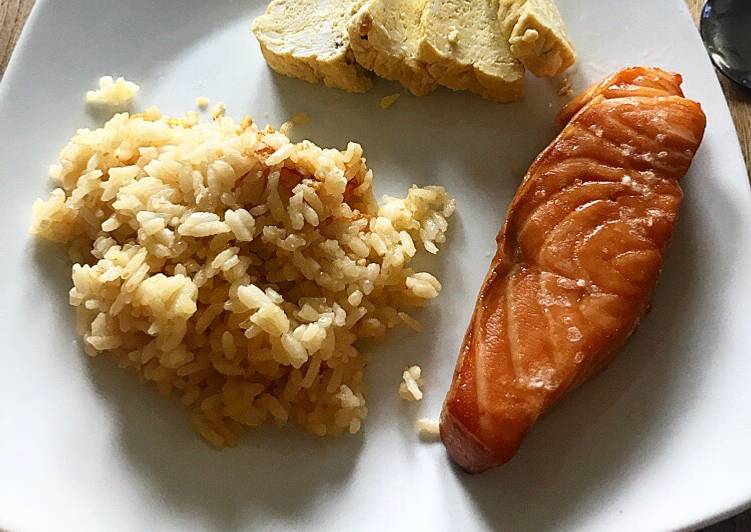 Japanese breakfasts highlight this idea well.
As you'll see, the breakfasts often rely on.
This is a traditional Japanese breakfast.
You can cook Traditional Japanese Breakfast using 16 ingredients and 6 steps. Here is how you achieve that.
Japanese breakfasts highlight this idea well.
As you'll see, the breakfasts often rely on.
This is a traditional Japanese breakfast.
You can cook Traditional Japanese Breakfast using 16 ingredients and 6 steps. Here is how you achieve that.
Ingredients of Traditional Japanese Breakfast
- It's of Grilled Salted Fish:.
- It's 2 of small salmon fillets.
- Prepare of Sea salt/ course salt.
- Prepare of Tamagoyaki:.
- It's 3 of Egg.
- You need 3 Tbsp of chicken stock.
- Prepare 2 Tsp of sugar.
- You need 1 Tbsp of soy sauce.
- Prepare of Rice:.
- Prepare 1/2 Cup of rice (Arborio rice/short grain).
- Prepare 5 Tbsp of chicken stock.
- It's 2 Tbsp of soy sauce.
- It's of Miso soup:.
- You need packet of Miso soup.
- You need 1 Cup of water.
- It's of Green onion.
If you are wondering on the ingredients in miso soup, it varies by every region in Japan. Every Japanese family has their own version of miso soup. Breakfast in Japan, as in most cultures, is an important meal setting you up for the day ahead. A traditional breakfast in Japan is a well-balanced mix of all the nutrients you need.
Traditional Japanese Breakfast instructions
- The night before, salt your salmon and wrap with paper towel and put in container over night..
- Next morning: your salmon will be dry and moist. Sprinkle with sea salt and place in the oven at 400 degrees F for 20 minutes..
- Let’s make tamagoyaki! Mix your seasoning and egg. Use a rectangle pan and grease. Pour a little bit of egg mixture and wait to cook enough to roll. Once you roll, slide back to the back of the pan and add more egg and repeat..
- Steam your rice with the broth, water and soy sauce for 25 minutes (when absorbed) add a little more water if needed..
- Add hot water to miso packet..
- Plate and enjoy!.
It consists of several small dishes, as is typical with t raditional Japanese food or Washoku (和食) as it is. Traditional Japanese breakfast from a breakfast buffet at a youth hostel. Not ramen, not a sushi omakase or pristine slices of sashimi, but a "Japanese breakfast": salted salmon, rice, and miso soup, with a few optional and customizable accompaniments. There is no better breakfast in the world. As the name implies, this breakfast could pass for someone's lunch or dinner, but one important feature of a traditional Japanese breakfast like the one pictured above is that it is fairly light -- no greasy, deep fried, or overly rich items, and the portions can be adjusted (less rice?