Sashimi. Sashimi is often the first course in a formal Japanese meal, but it can also be the main course, presented with rice and miso soup in separate bowls. [dubious - discuss] Japanese chefs consider sashimi the finest dish in Japanese formal dining and recommend that it be eaten before other strong flavors affect the palate. The sliced seafood that composes the main ingredient is typically draped. The word sashimi actually predates sushi by around two decades. Sushi is not raw fish, but rather vinegared rice that is mixed with other ingredients, which may or may not include raw fish. In some countries, the terms "sashimi" and "sushi" may be used interchangeably, but this is incorrect usage.
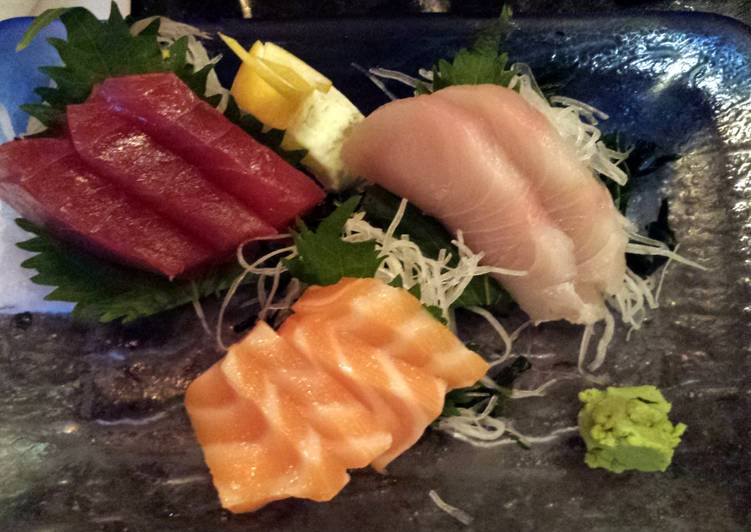 Raw fish is one of the traditional ingredients in sushi.
Sashimi is specifically raw—and fresh—seafood, like tuna or salmon.
Most sashimi is made from saltwater dwellers because freshwater fish have higher risks of parasites.
You can cook Sashimi using 6 ingredients and 4 steps. Here is how you achieve it.
Raw fish is one of the traditional ingredients in sushi.
Sashimi is specifically raw—and fresh—seafood, like tuna or salmon.
Most sashimi is made from saltwater dwellers because freshwater fish have higher risks of parasites.
You can cook Sashimi using 6 ingredients and 4 steps. Here is how you achieve it.
Ingredients of Sashimi
- You need 3 slice of Tuna.
- It's 3 slice of Salmon.
- Prepare 3 slice of Yellowtail.
- It's 2 grams of Ginger.
- You need 2 grams of Wasabi.
- You need 1/2 cup of soy sauce.
Sashimi is usually served thinly sliced on a bed of daikon, sans rice. Sashimi (刺身) is thinly sliced, raw food. It is one of the most famous dishes in the Japanese cuisine. Seafood is most commonly eaten as sashimi, but other types of meats (such as beef, horse and deer) and foods (such as yuba tofu skin and konnyaku) can also be served as sashimi.
Sashimi step by step
- Buy fresh fish at Holefoods.
- Keep it fresh, cut it wisely.
- Serve it cold.
- Enjoy.
Some people confuse sashimi with sushi. Unlike sashimi, sushi includes vinegared rice. Sashimi is an important element in Japanese cuisine, where it is often served at the beginning of a meal as a palate cleanser and appetizer. It is often compared to sushi, another popular Japanese dish, although the two are actually different. Sashimi is raw fish sliced very thin and served with a.